Target your Zone of Proximal Development (ZPD). Let AI support you when you start learning, and pull back support as you master the skill.
The future doesn't belong to people who write code or design interfaces alone. It belongs to people who know how to build and orchestrate AI agents to do the heavy lifting with them. But how do you start integrating AI into your work without losing your own skills?
Vygotsky's ZPD and Scaffolding
In learning science, the Zone of Proximal Development (ZPD) is the sweet spot: tasks that you cannot do alone, but can do with a little guidance.
AICoach uses a Scaffolding Reducer:
- Day 1 (High Support): When you build a new agent, AICoach provides step-by-step instructions, autocomplete, and code examples.
- Day 5 (Medium Support): As your mastery score increases, autocomplete is turned off. AICoach only highlights syntax errors.
- Day 10 (Independent Mastery): The tutor steps back completely. You write the code; the AI only audits the final build.
This ensures you are always growing, preventing AI from becoming a cognitive crutch.
Low Competence ──> High AI Scaffolding (Step-by-step hints)
High Competence ──> Low AI Scaffolding (Auditing & reviews only)
Build Your First Agent
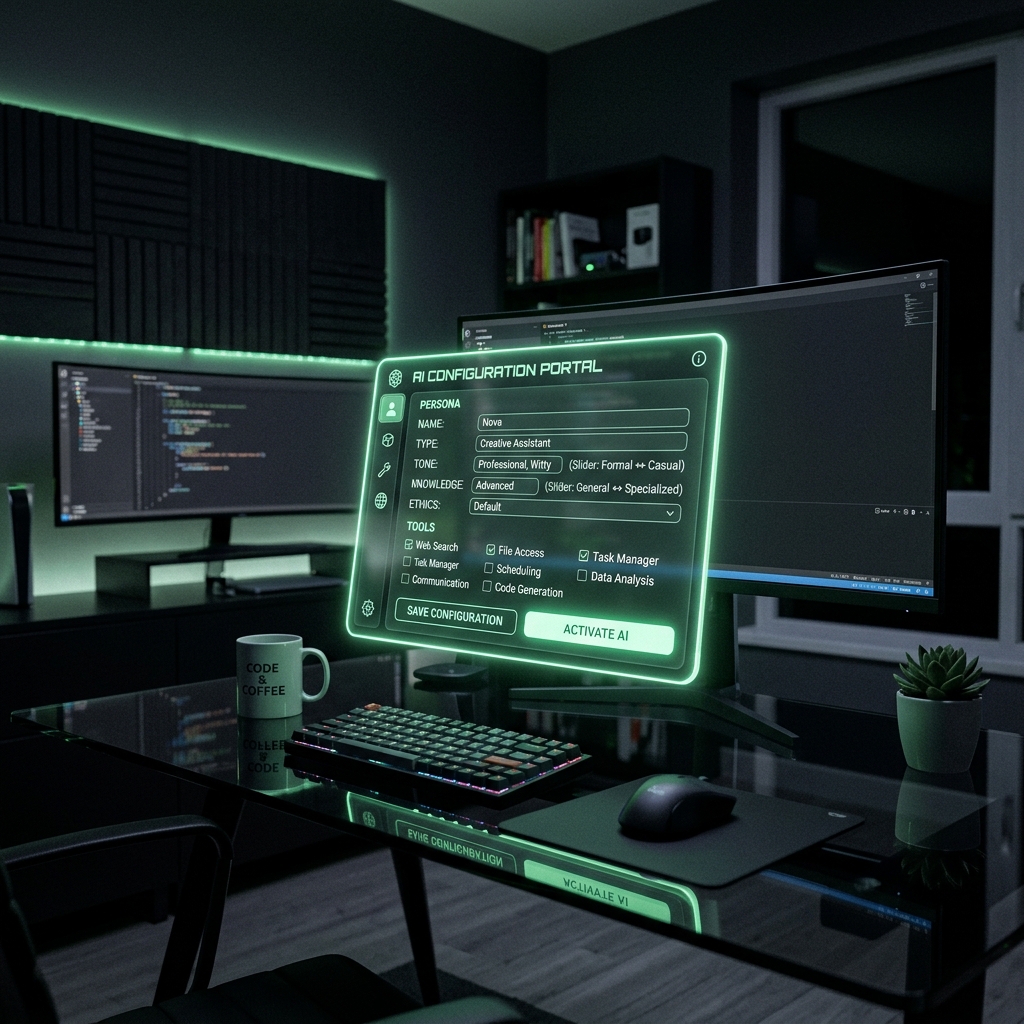
With the Agent Builder Widget inside AICoach, you can prototype custom assistants directly:
- Define the Persona: Instruct your agent on how to behave (e.g., Socratic code reviewer, aesthetic designer).
- Toggle Tools: Equip it with web search, file parsers, or image generators.
- Deploy: Run it in your workspace, testing its responses inline.
Key Takeaways
- Target your ZPD: Let AI support you where you are weak, and pull back where you are strong.
- Be the orchestrator: Learn to build custom agents tailored to specific tasks in your daily work.
- Keep a Thinking Notebook: Use the scratchpad to document prompt edits and agent outputs.